Fun Home: Rewriting Daedalus and Icarus

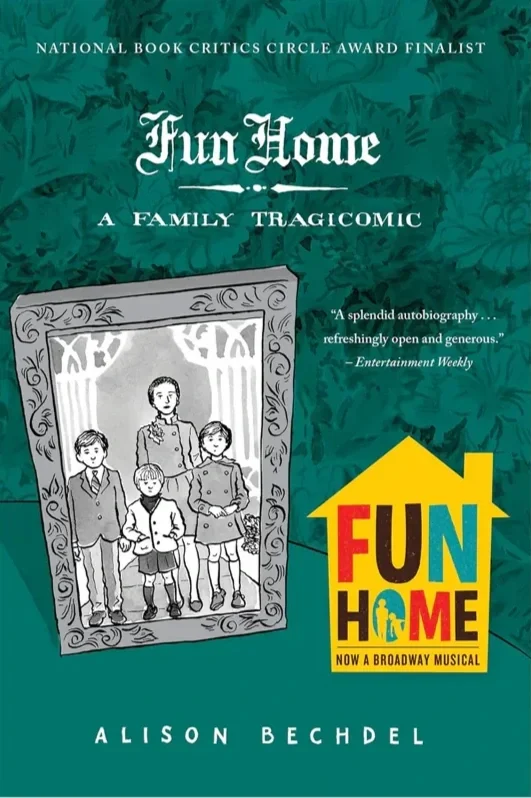
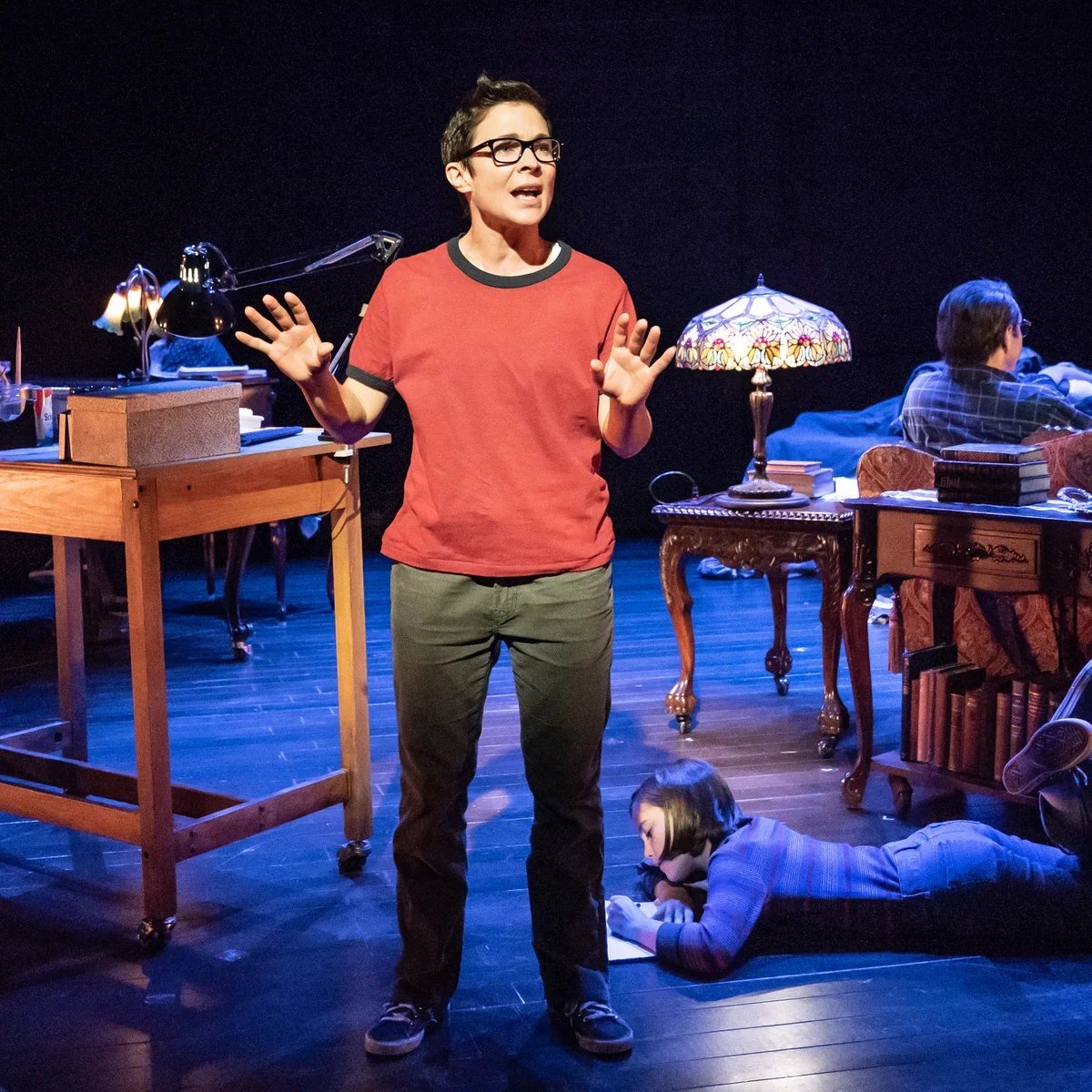
In Fun Home, Alison Bechdel explores her complicated relationship with her father through layered literary allusions, most notably to the myth of Daedalus and Icarus. What makes this comparison so effective is that their roles never stay fixed. Instead, Bechdel creates a pattern of role reversal that challenges the idea of who is the creator and who is the one who falls.
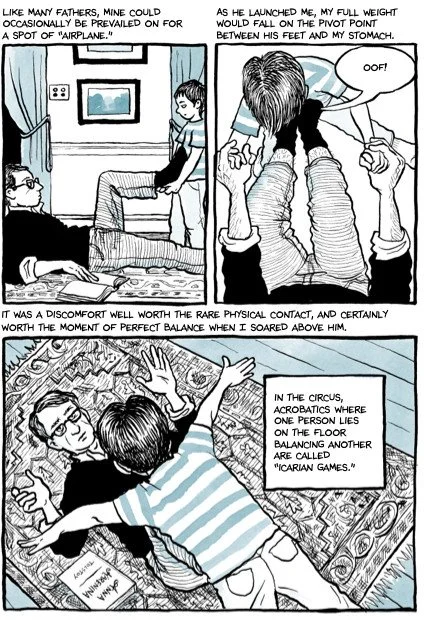
At the beginning of the novel, Bechdel visually presents herself as Icarus, lifted into the air by her father. However, she immediately complicates this image by stating that it is actually her father who will “plummet from the sky.” From the start, Bruce is positioned as Icarus, but Bechdel quickly reveals that he is also Daedalus. She describes him as “a Daedalus of decor,” emphasizing his obsessive attention to appearance and control. Like Daedalus, Bruce is a craftsman, carefully constructing his world. At the same time, like Icarus, he becomes the victim of that construction.
This dual role is most clearly seen in the Bechdel home, which functions as a modern labyrinth. Bruce restores and perfects the house, filling it with “mirrors, distracting bronzes, multiple doorways,” creating a space that is both beautiful and disorienting. Just as Daedalus built the labyrinth to hide the Minotaur and later became trapped inside it, Bruce uses the house to conceal his identity, particularly his sexuality. His need to maintain a perfect facade turns the home into a kind of prison, not only for himself but for his family as well.
Bechdel then returns to the Icarus parallel through her father’s death. The imagery of the sun appears repeatedly, reinforcing this connection. He dies after being hit by a truck during a heatwave, and Bechdel emphasizes the detail that it was a “Sunbeam Bread” truck. This detail, along with repeated appearances of Sunbeam imagery throughout the novel, highlights how his death mirrors Icarus flying too close to the sun. It suggests that Bruce’s downfall is not random, but tied to the life he constructed and the identity he tried to suppress.
As the novel progresses, Bechdel expands beyond Greek mythology and incorporates allusions to The Odyssey and Ulysses, both of which also center on complex father-child relationships. Through these texts, Bechdel reframes her connection to her father as not just biological, but spiritual. Like the relationships in these works, their bond is distant, fragmented, and not fully understood until later.
Her time studying Ulysses in college becomes a turning point. As she begins to understand her own sexuality, she also begins to reinterpret her father’s life. While Alison moves forward in self-discovery, Bruce remains trapped in performance and appearance. This contrast further reinforces the idea that their stories are intertwined but moving in different directions.
By the end of the novel, Bechdel brings these ideas full circle. She returns to the image of flight, but this time she reframes it. Instead of falling away from her father, she imagines herself jumping toward him, suggesting that their relationship continues on a different level. She comes to understand their connection as both physical and spiritual, shaped as much by his death as by his life.
Through the interwoven allusions to Daedalus and Icarus, The Odyssey, and Ulysses, Bechdel presents her relationship with her father as complex, shifting, and ultimately foundational to her understanding of herself. Her father’s “fall” does not just end his story, it helps shape hers.
